How to Trade Meme Coins in 2026 Without Becoming Exit Liquidity
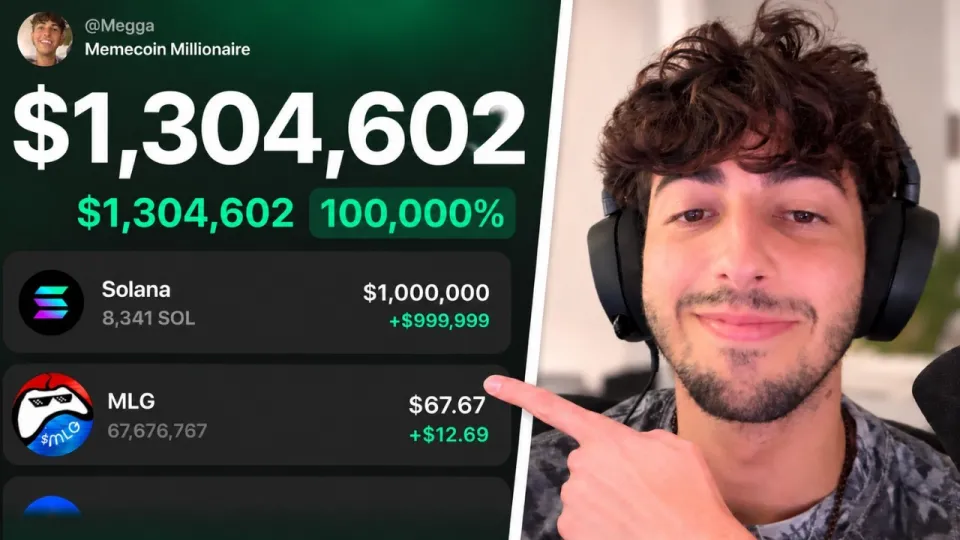
Video: How I Made $1,000,000 Trading Memecoins (FULL BREAKDOWN)
Want articles like this for your own video to promote it on YouTube and Google? Order them through the Telegram bot @sat_sit_bot. It writes articles around your video, embeds the video and publishes them on popular niche websites (no ads). Free trial — 50 articles.
· based on the channel Megga
Key takeaways
- Megga's video breaks down a $1,000,000 profit made trading meme coins, with losing streaks included as part of the process.
- Meme coin gains are zero-sum: every dollar of profit comes from another trader's loss, usually late buyers.
- Screening tools such as Padre and free courses are promoted in the video description, not a guarantee of results.
- Commenters report 200x wins wiped out by phishing and revenge trading, which shows execution risk is as big as market risk.
- Nine to twelve hours of screen time is the workload the video's author describes, not a side hustle schedule.
Meme coin trading is a high-risk, zero-sum game where a small number of disciplined traders extract profit from a much larger pool of late buyers, and Megga's breakdown of a $1,000,000 run is a rare look at the mechanics behind such a result. The video walks through the full journey rather than just the wins, and the description links a free course for anyone who wants the underlying framework. The honest takeaway is that the number is real but the path to it is not repeatable by watching one video.
What a $1,000,000 meme coin result actually represents
A seven-figure PnL in meme coins is the sum of many asymmetric bets, not one lucky token. The structure of the niche explains why: a new token can go from a few thousand dollars of liquidity to a multi-million market cap in hours, so a $2,000 position taken early can turn into $200,000 before most people see the chart. The reverse is equally true, and the same position can go to zero in minutes when the deployer or the first wallets exit. Megga's breakdown covers the full arc, including drawdowns, because the equity curve of a meme trader is defined by how losses are handled, not by the size of the best trade.
The workflow behind nine to twelve hour trading days
Long screen time only pays off when it is structured, and the video's framing makes clear that the hours are spent on process rather than on staring at charts. A workable routine looks like this:
- Build a watchlist before the session: wallets that historically buy early, deployers with a track record, and communities that survive past day one.
- Screen new launches for liquidity, holder distribution and whether top wallets are already exiting.
- Size every entry so a total loss costs a fixed, small percentage of the bankroll.
- Take partial profit into strength instead of waiting for a round number.
- Log every trade with the reason for entry and exit, then review the log weekly.
The point of the schedule is repetition: the same filters, the same position sizes, the same exit rules. Traders who improvise under pressure are the ones who give back a month of gains in one afternoon.
Risk rules that separate traders from exit liquidity
Every dollar made in meme coins comes from someone else's dollar, and the buyers who arrive after the narrative peaks are usually the ones funding the winners. That is not a moral judgment, it is the mechanical structure of a zero-sum market, and it should shape how you trade. Practical rules that follow from it:
- Assume any token without a proven team can go to zero, and size as if it will.
- Never add to a losing meme position; averaging down in illiquid tokens is how accounts die.
- Treat wallet security as part of risk management: hardware wallets for holdings, a separate hot wallet with limited funds for trading, and no signing of unknown transactions.
- Cap exposure per token and per narrative, because meme coins in the same meta tend to crash together.
- Withdraw profits to stablecoins on a schedule, so a good month is not erased by a bad week.
Commenters on the video describe exactly this failure mode: a large multiplier on one token, then a drained wallet after a phishing signature, then attempts to win it back that cost several thousand dollars more. The market did not take that money; poor operational hygiene did.
How to read the meta and spot a narrative early
Early entries come from understanding which theme is attracting attention before the tickers multiply. Meme coin metas rotate around cultural moments, animal coins, political events, AI agents and copycat waves of whatever just ran. To get in before a token reaches a $30,000 market cap, you need to recognise the pattern rather than the specific coin: which communities are active, which wallets are accumulating, and whether the idea is simple enough to spread on social media in one sentence. That intuition is built from watching hundreds of launches and recording which ones survived their first 24 hours. There is no shortcut, but there is a filter: if you cannot explain in one line why a stranger would buy this token, you are probably the stranger's exit liquidity.
What the skeptics and the fans both get right
The comments under the video split into two camps, and both make valid points. Supporters highlight the transparency about losses and the value of learning from streamers and communities instead of trading alone. Critics argue that viewers will be baited into becoming liquidity for experienced traders. Both are correct at the same time: the strategies shown are real, and the majority of people copying them without risk limits will lose money. The realistic position is to treat the video as education about process, position sizing and psychology, not as a signal service. If you have a full-time job, the honest answer is that you cannot replicate a nine-hour session, so you should trade smaller, focus on fewer setups, and expect slower compounding.
Useful links
- Free course from the video description
- Trading platform with low fees
- Megga on Twitch
- Megga on TikTok
- Megga on X
Final thoughts on copying a seven-figure meme coin run
A $1,000,000 result in meme coins is achievable, but it is built on thousands of hours, strict sizing and the willingness to take many small losses. The channel Megga deserves credit for publishing the drawdowns alongside the wins, because that is the part most trading content hides. If you take one thing from the breakdown, make it the process: fixed risk per trade, profits moved out regularly, and wallet security treated as seriously as entries. Start with the free course and paper-trade the workflow before risking real capital.
Source: How I Made $1,000,000 Trading Memecoins (FULL BREAKDOWN) · Markdown version
Questions & answers
How much capital do you need to start trading meme coins?
There is no fixed minimum, but the practical floor is an amount you can lose entirely without changing your life. Most experienced traders keep the majority of funds in stablecoins or a hardware wallet and only move a small working balance into a hot wallet for trading. Starting small lets you test filters and exit rules before size amplifies mistakes.
Is making $1,000,000 from meme coins realistic for a beginner?
It is possible but statistically rare, and it usually requires years of screen time plus strict risk control. The more realistic early goal is to stop losing money on bad entries and to keep a positive equity curve over a few months. Treat large numbers as an outcome of process, not as a target to chase with oversized bets.
How do you avoid getting your wallet drained?
Use a separate hot wallet with limited funds for trading, never sign transactions from links you did not verify, and keep long-term holdings on a hardware wallet. Revoke token approvals regularly and treat any unsolicited direct message with a link as hostile. Most reported losses in the niche come from phishing signatures, not from bad charts.
How do you tell if a meme coin narrative will actually run?
Look for a simple idea that spreads in one sentence, active communities, and early wallets accumulating rather than distributing. Check liquidity and holder concentration before entering, and accept that most new launches fail within the first day. The skill is in filtering fast, not in predicting every winner.