Meme coin scrutiny in 2026 as Al Green presses Bessent over Trump token
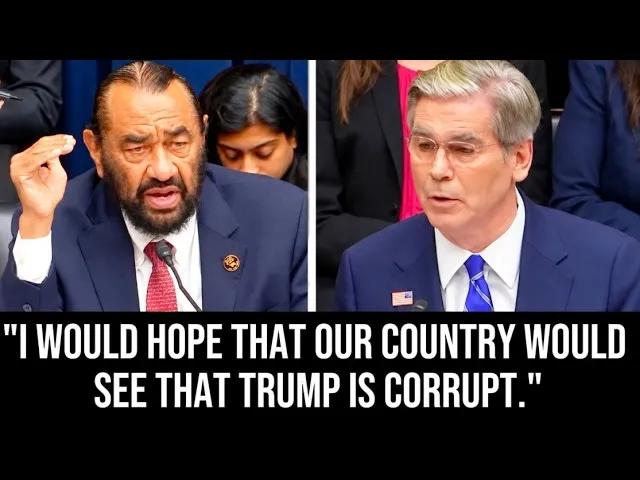
Video: WHOA: Al Green GRILLS Bessent over Trump's meme coin “scam”
Want articles like this for your own video to promote it on YouTube and Google? Order them through the Telegram bot @sat_sit_bot. It writes articles around your video, embeds the video and publishes them on popular niche websites (no ads). Free trial — 50 articles.
· based on the channel Daniel Reed
Key takeaways
- Senator Al Green questioned Treasury Secretary Scott Bessent about Trump's meme coin and whether it constitutes a scam.
- The hearing focused on conflicts of interest, disclosure and who bears the losses when a politically branded token collapses.
- Bessent defended the administration's crypto stance while avoiding direct comment on the token's economics.
- Retail buyers, not insiders, absorb most of the downside in meme coin launches with concentrated insider holdings.
- Commentators compared the structure to Ponzi and pyramid schemes and questioned the lack of clear regulation.
A meme coin is a cryptocurrency with no underlying business or cash flow whose price depends almost entirely on attention and the next buyer. In 2026 the debate moved from trading forums into the US Senate, where Senator Al Green pressed Treasury Secretary Scott Bessent over Trump's meme coin and the charge that it functions as a scam. The exchange matters beyond politics: it puts the mechanics of meme coin launches, insider allocations and retail losses under official scrutiny.
What Al Green asked Scott Bessent about the Trump meme coin
The core of the hearing was a conflict-of-interest question: can an administration regulate digital assets while its own figurehead profits from a token? Green framed the token as a vehicle that transfers money from ordinary buyers to insiders, and asked whether the Treasury sees any obligation to warn the public. Bessent defended the administration's broader crypto agenda and treated the token as a private matter rather than a policy instrument, which is exactly the gap critics point to. The clip circulated by Daniel Reed captures the moment the argument turns from partisan noise into a question about disclosure standards for politically branded assets.
How a meme coin actually transfers money
A meme coin moves value through the launch structure, not through any product. The typical sequence looks like this:
- Insiders hold a large share of supply at near-zero cost before the token is public.
- Promotion creates a demand spike; early buyers bid the price up.
- Insiders sell into that liquidity, and the price falls back toward zero.
- Late buyers hold the residual supply with no buyer left to sell to.
This is why the phrase "greater fool" keeps appearing in the discussion: profit requires someone willing to pay more than you did. It is not identical to a Ponzi scheme, which pays old investors from new deposits by design, but the outcome for the last buyers is often the same. The hearing's central accusation is that a token tied to a public figure converts attention into a transfer of wealth, and that the branding makes the risk look like endorsement.
Where the scam label comes from
Calling a token a scam usually rests on three claims: hidden concentration of supply, misleading promotion and the absence of any disclosure obligation. None of these requires a formal fraud finding to hurt buyers, because the damage happens before any regulator acts. The Treasury's position in the exchange was essentially that existing frameworks cover the conduct; critics reply that a token launched by a political brand is precisely the case where existing frameworks were never tested. The practical lesson for traders is that a meme coin's risk profile is set at launch, and no amount of later transparency repairs an allocation that was never disclosed.
What traders and skeptics keep asking
The most common doubts raised around this story are practical rather than ideological. People want to know whether buying a politically branded token is an investment or a donation, whether insider selling is visible in advance, and whether a loss can be recovered. On the first point, a token with no revenue and no contractual claim is a bet on sentiment, not a claim on value. On the second, on-chain supply distribution is public, and a concentration above roughly a fifth of supply in a handful of wallets is a red flag worth checking before any purchase. On the third, losses in a voluntary spot purchase are rarely recoverable; the legal route exists mainly where promotion contained provably false statements. A separate recurring worry is laundering and access-seeking, which is hard to prove case by case but explains why regulators treat branded tokens as a reputational risk rather than a curiosity.
How to evaluate a meme coin before buying
Start from supply distribution and work backwards to the pitch. Check how much of the total supply sits in wallets linked to the team, how much liquidity is locked and for how long, and whether the token's promotion makes any claim about future value. Compare the market capitalization with the actual liquidity available to sell into: if the pool is a small fraction of the cap, exiting in size is impossible without crashing the price. Treat endorsements by public figures as marketing, not diligence. And size any position as money you expect to lose entirely, because in this category the base rate of total loss is high and the upside depends on a later buyer appearing.
Why the hearing matters for crypto regulation in 2026
The hearing signals that meme coins are now a regulatory topic, not a sideshow. Once a token is associated with a sitting administration, questions about disclosure, insider allocations and conflicts of interest become institutional, and the answers shape how the next wave of branded tokens is launched. For traders, the takeaway is that political attention cuts both ways: it can inflate demand in the short term and invite scrutiny that removes the lax conditions the model depends on.
The bottom line
The exchange between Al Green and Scott Bessent turned a token launch into a test of whether political branding can substitute for disclosure. The mechanics are unforgiving: concentrated insider supply plus promotional demand equals losses for late buyers, whatever label is applied. Daniel Reed's breakdown of the hearing is a useful record of how the argument was framed on both sides. Watch the supply distribution before the narrative, and treat any politically branded token as a high-risk speculation rather than an endorsement-backed asset.
Source: WHOA: Al Green GRILLS Bessent over Trump's meme coin “scam” · Markdown version
Questions & answers
Is a meme coin the same as a Ponzi scheme?
No. A Ponzi scheme pays earlier investors from new deposits by design, while a meme coin is an open-market asset whose price depends on demand. The economic result for the last buyers can look similar, because insiders with cheap supply sell into promotional demand and late buyers absorb the loss.
Why is Trump's meme coin described as a scam in the hearing?
The accusation rests on conflicts of interest, undisclosed concentration of supply and promotion that can read as official endorsement. Senator Al Green pressed Treasury Secretary Scott Bessent on whether the Treasury has any duty to warn buyers, and Bessent treated the token as a private matter rather than a policy question.
Can I get my money back after a meme coin collapses?
Usually not. A voluntary spot purchase carries the risk of total loss, and recovery is realistic mainly where promotion contained provably false statements that can be litigated. Check supply concentration and locked liquidity before buying rather than after.
What should I check before buying a politically branded token?
Look at how much supply sits in team-linked wallets, how much liquidity is locked and for how long, and whether the market cap is small enough relative to the liquidity pool to allow an exit. Treat endorsements as marketing and size the position as money you can afford to lose entirely.